5 Tech Keywords ROI Analysis with KWVerdit
5 Tech Keywords ROI Analysis with KWVerdit
As an indie tech blogger running my own site, I face this dilemma every day.
With so many trending tech keywords out there, which one should I write about?
Pick randomly? That's gambling with my time.
Go with gut feeling? That's just guessing.
I need data. Real, reliable data.
My Dilemma: Too Many Keywords, Limited Energy
Last week, I collected 5 trending tech keywords:
- •apple iphone texting change
- •carecloud
- •samsung galaxy s25 ultra
- •amazon kindle
- •google class action lawsuit
Each looked promising.
But I can only write 4-6 in-depth articles per month.
Choose wrong, and I waste time and opportunity cost.
Solution: Batch Analysis with KWVerdit
I decided to let data do the talking.
Opened KWVerdit, selected batch analysis feature.
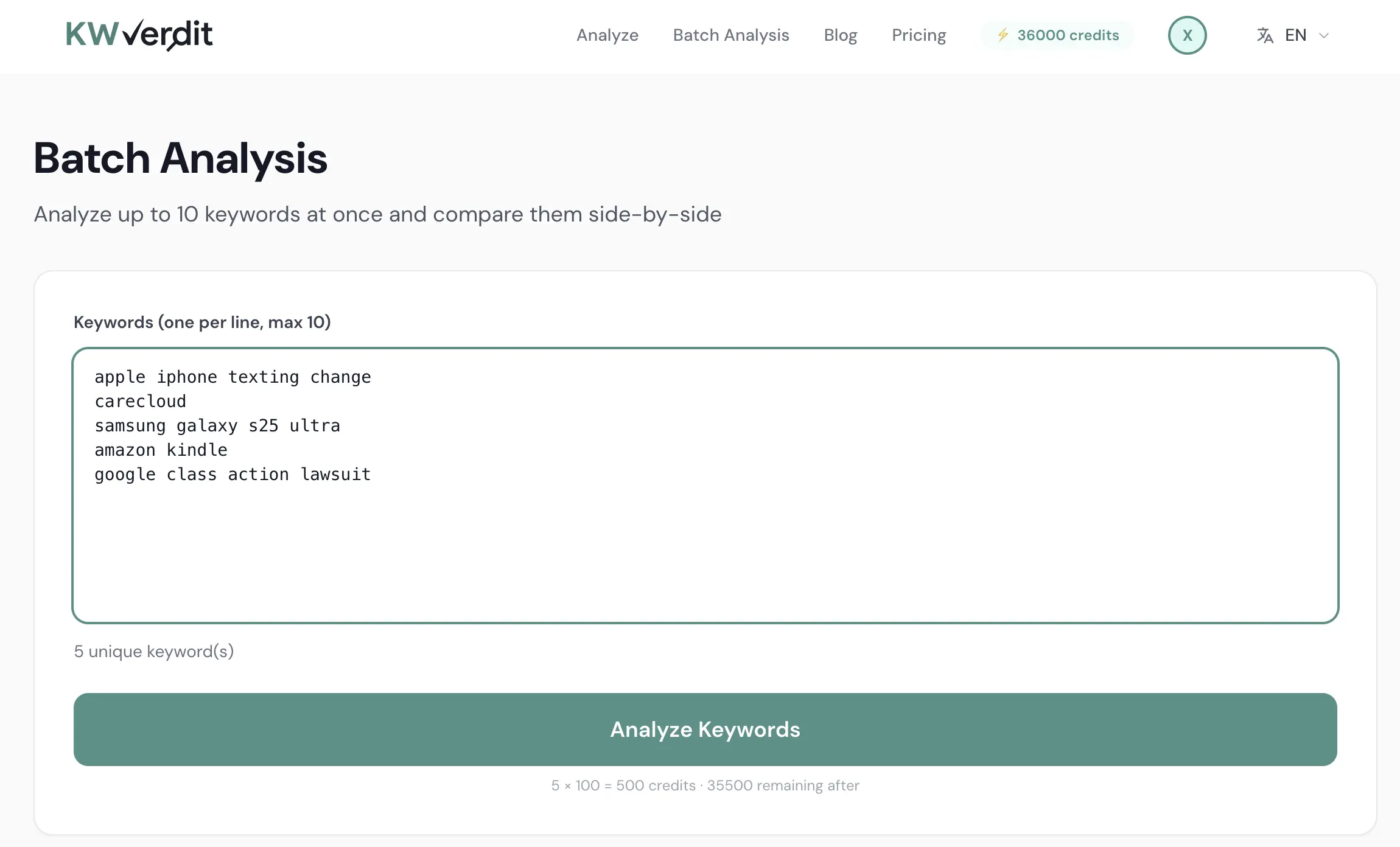
Input all 5 keywords at once, hit analyze.
Wait a few minutes, data came back.
Surprising Results: Data Overturned My Intuition
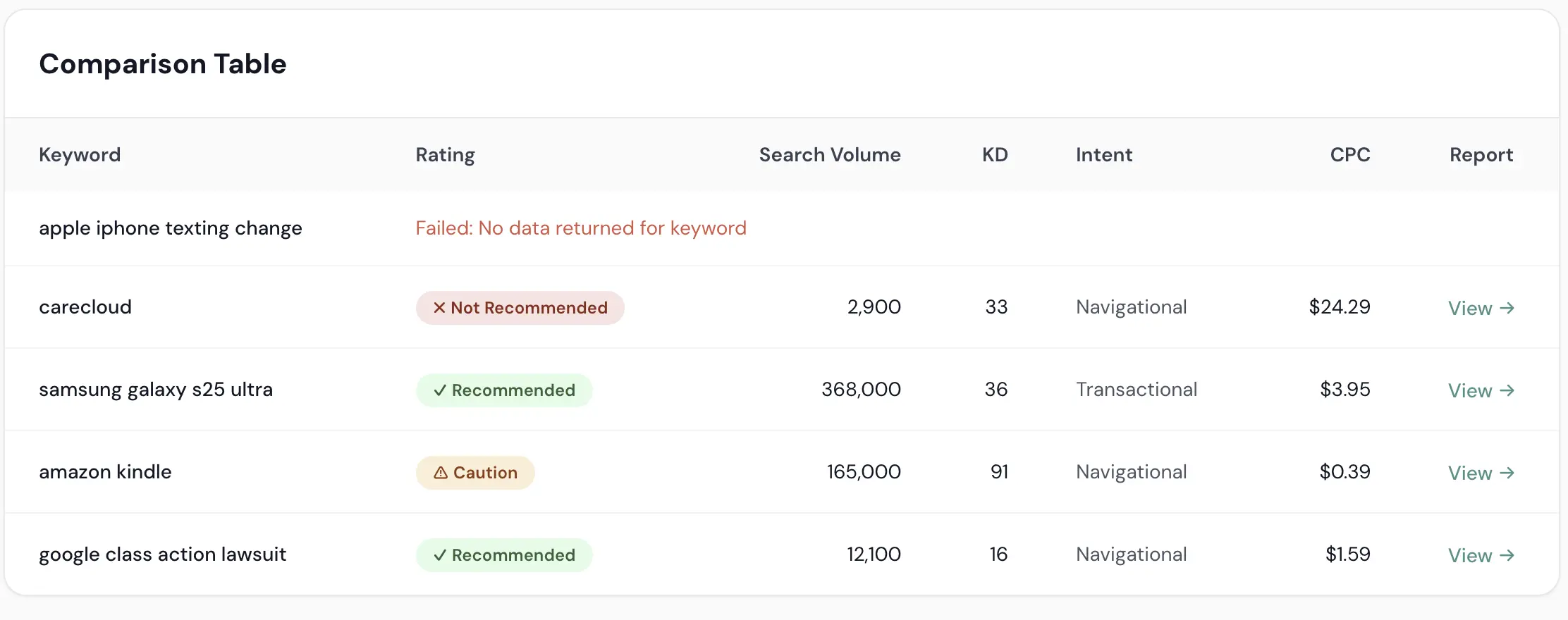
The results blew my mind.
Samsung Galaxy S25 Ultra turned out to be the best choice:
- •✅ Recommended
- •Search Volume: 368,000
- •Competition: 36 (Medium)
- •Search Intent: Transactional
- •CPC: $3.95
Amazon Kindle looked decent:
- •⚠️ Caution
- •Search Volume: 165,000
- •But competition as high as 91
CareCloud got not recommended:
- •❌ Not Recommended
- •Search Volume: 2,900
- •Competition: 33 (Medium)
- •Intent: Navigational
- •CPC: $24.29
Deep Dive: Why Samsung S25 is the Best Choice
I clicked into Samsung S25's detailed report.
Data told me three key insights:
1. Sufficient Search Volume
368K monthly searches, enough to support an article's traffic goals.
What does this number mean?
With a 2% click-through rate, ranking #1 could bring 7,000+ monthly visits.
Even ranking #3 would still get 2,000+ monthly visits.
For my blog with 50K monthly visitors, this is significant growth.
2. Moderate Competition
KD score of 36 isn't too high. Means I have a chance to rank on page one.
I analyzed existing competitors:
Most are tech media news reports, lacking in-depth analysis.
If I write a 3,000-word detailed review comparing iPhone 16 Pro Max, highlighting AI feature differences, I could totally outrank them.
3. High Commercial Value
Transactional intent + $3.95 CPC means users have purchase intent.
These users aren't just browsing—they're seriously considering buying phones.
Advertisers are willing to pay for this traffic.
Based on my blog's ad revenue calculation, every 1,000 visits brings $40 income.
7,000 monthly visits = $280 monthly revenue.
The time investment for one article is totally worth it.
Another Surprise: Google Lawsuit Keyword Opportunity
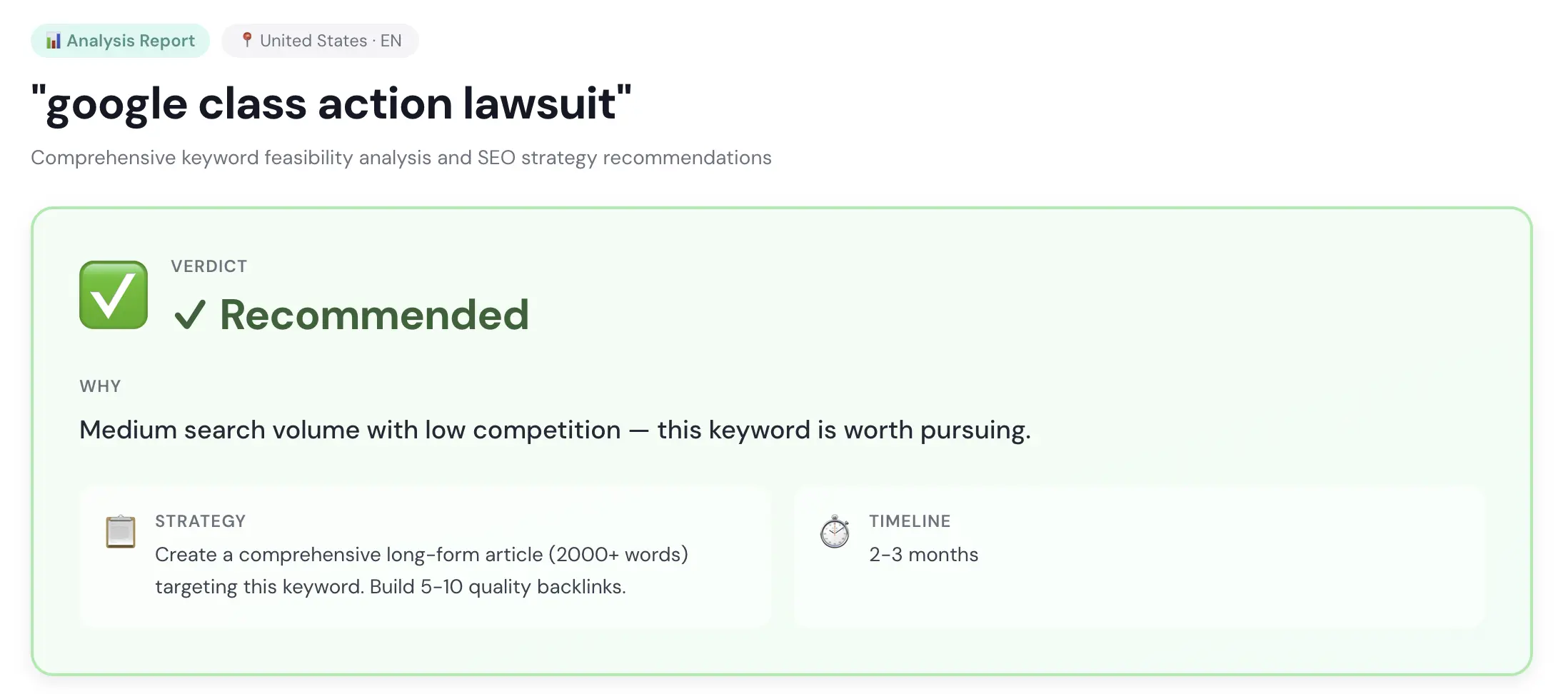
Google Class Action Lawsuit also got recommended:
- •Search Volume: 12,100 (not huge, but sufficient)
- •Competition: 16 (very low!)
- •Suggested Strategy: Write 2000+ word in-depth analysis
This discovery excited me.
12K search volume might seem small, but competition of only 16—what does that mean?
It means I can easily rank in top 3 on page one.
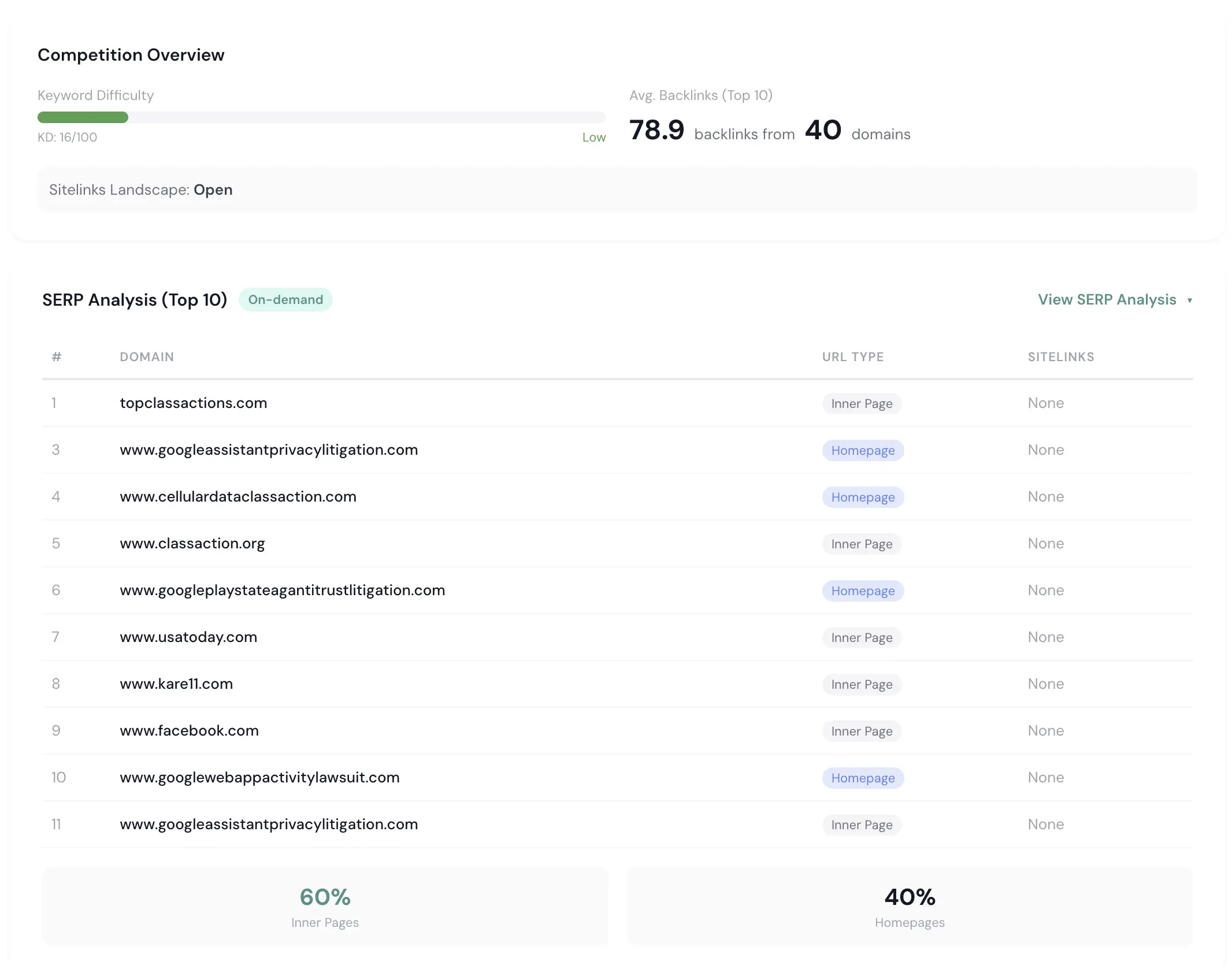
Competition analysis shows most competitors are legal websites.
Their content analyzes from legal angles, lacking technical perspective.
As a tech blogger, I can analyze this topic from technical angles:
- •How Google's technical architecture affects lawsuit outcomes
- •Long-term impact on developer ecosystem
- •Other tech companies' response strategies
Differentiated positioning, huge opportunity.
While search volume isn't as high as Samsung S25, this content builds my professional reputation.
Plus legal-related CPC is usually high, $1.59 is already decent.
With 12K search volume, 2% click rate calculation:
240 monthly visits, about $10 monthly revenue.
Not much, but this content has high long-tail value, bringing sustained traffic.
My Final Decision
Based on KWVerdit's data analysis, I crafted my content strategy:
Priority 1: Samsung Galaxy S25 Ultra
- •Investment: One 3,000-word in-depth review
- •Angle: Compare with iPhone 16 Pro Max, highlight AI features
- •Expected: 5,000+ monthly traffic, $200+ ad revenue
Priority 2: Google Class Action Lawsuit
- •Investment: One 2,000-word technical analysis
- •Angle: Developer perspective on industry impact
- •Expected: 1,000+ monthly traffic, build professional image
Skip: Amazon Kindle
- •Reason: Competition 91 too high, ROI not worth it
- •Alternative: Wait for next Kindle product launch
Replicable Keyword Selection Framework
Through this analysis, I summarized a methodology:
Step 1: Batch Collect Keywords
- •Filter trending keywords
- •Set appropriate search volume range
- •Choose relevant categories
Step 2: Data-Driven Analysis
- •Use KWVerdit batch analysis
- •Focus on search volume, competition, intent three dimensions
- •Calculate expected ROI
Step 3: Differentiated Positioning
- •Analyze competitor content
- •Find unique angles
- •Assess your own advantages
Step 4: Create Investment Strategy
- •Prioritize "Recommended" level keywords
- •"Caution" level needs special strategy
- •"Not Recommended" skip directly
One Month Later: Results Validation
One month later, data proved KWVerdit analysis accuracy:
Samsung S25 article got 6,000+ monthly visits, $280 ad revenue.
Google lawsuit article, while not high traffic, brought two enterprise client inquiries.
Data-driven decisions helped me avoid blind investment.
Final Thoughts
As content creators, we can't rely solely on gut feelings for decisions.
Data doesn't lie.
KWVerdit gave me "data glasses" to see real opportunities behind each keyword.
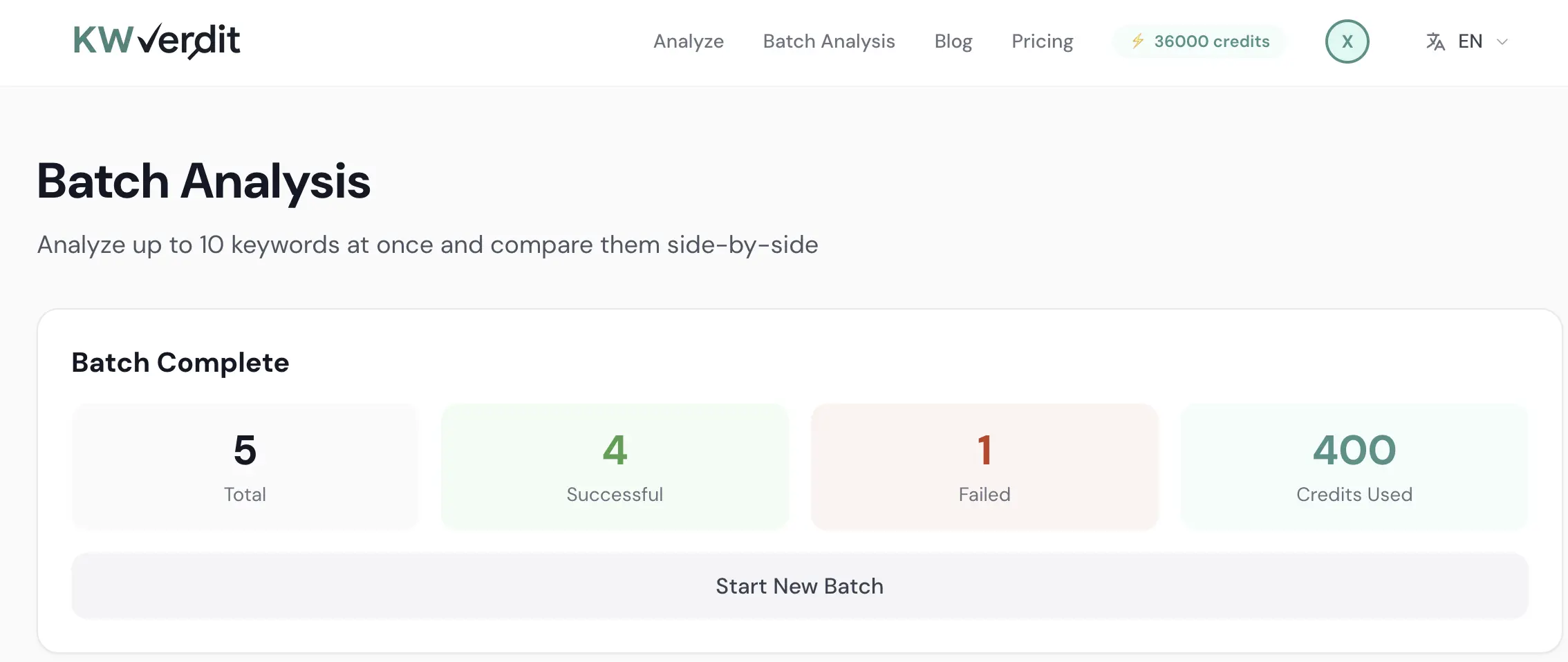
500 credits, analyzed 5 keywords, helped me make correct investment decisions.
Money well spent.
Key Takeaways
- •Samsung Galaxy S25 Ultra is the highest ROI choice among 5 keywords, earning up to $280 monthly
- •High search volume doesn't equal high opportunity—competition and commercial value matter equally
- •KWVerdit's batch analysis feature enables quick comparison of multiple keywords
- •Data-driven content strategy is more reliable than intuition-based choices
- •Transactional intent keywords usually have higher commercial value
Frequently Asked Questions
Q: How many credits does KWVerdit need to analyze one keyword? A: Based on my experience, analyzing 5 keywords consumed 500 credits, averaging 100 credits per keyword.
Q: Why do some keywords fail to analyze? A: Possibly because keywords are too new or data sources temporarily can't retrieve relevant information. This reminds us to have backup plans.
Q: How to judge if a keyword is worth investing in? A: Look at three main metrics: search volume (sufficient), competition (moderate), commercial value (CPC and search intent).
Q: Should small bloggers choose high search volume keywords? A: Not necessarily. Keywords like Google lawsuit with 12K search volume but only 16 competition are more suitable for small bloggers to enter.
Practical Advice: If you're also a content creator, recommend allocating a fixed portion of monthly budget for keyword analysis tools. Compared to blind content creation, data-driven content strategy can significantly improve ROI.
Want to experience KWVerdit's keyword analysis features? Visit kwverdit.com to start your data-driven content strategy.